Underground Fire Lines and Fire Hydrants in Goodyear, AZ Installed to Code
Underground fire lines carry water from the public main to your building's sprinkler system, standpipes, and private fire hydrants. These fire service mains must be sized, installed, and tested correctly, because every fire protection system above ground depends on them. Metro Valley Fire installs, repairs, and replaces underground fire lines and fire hydrants in Goodyear, AZ for new commercial developments, industrial parks, apartment communities, and building expansions. Our work follows NFPA 24 and is coordinated with your water provider, site contractor, and the fire marshal.
Schedule an Underground Fire Line Consultation in Goodyear, AZ
What Underground Fire Lines Include
Underground fire lines are made up of several connected components.
Fire Service Mains
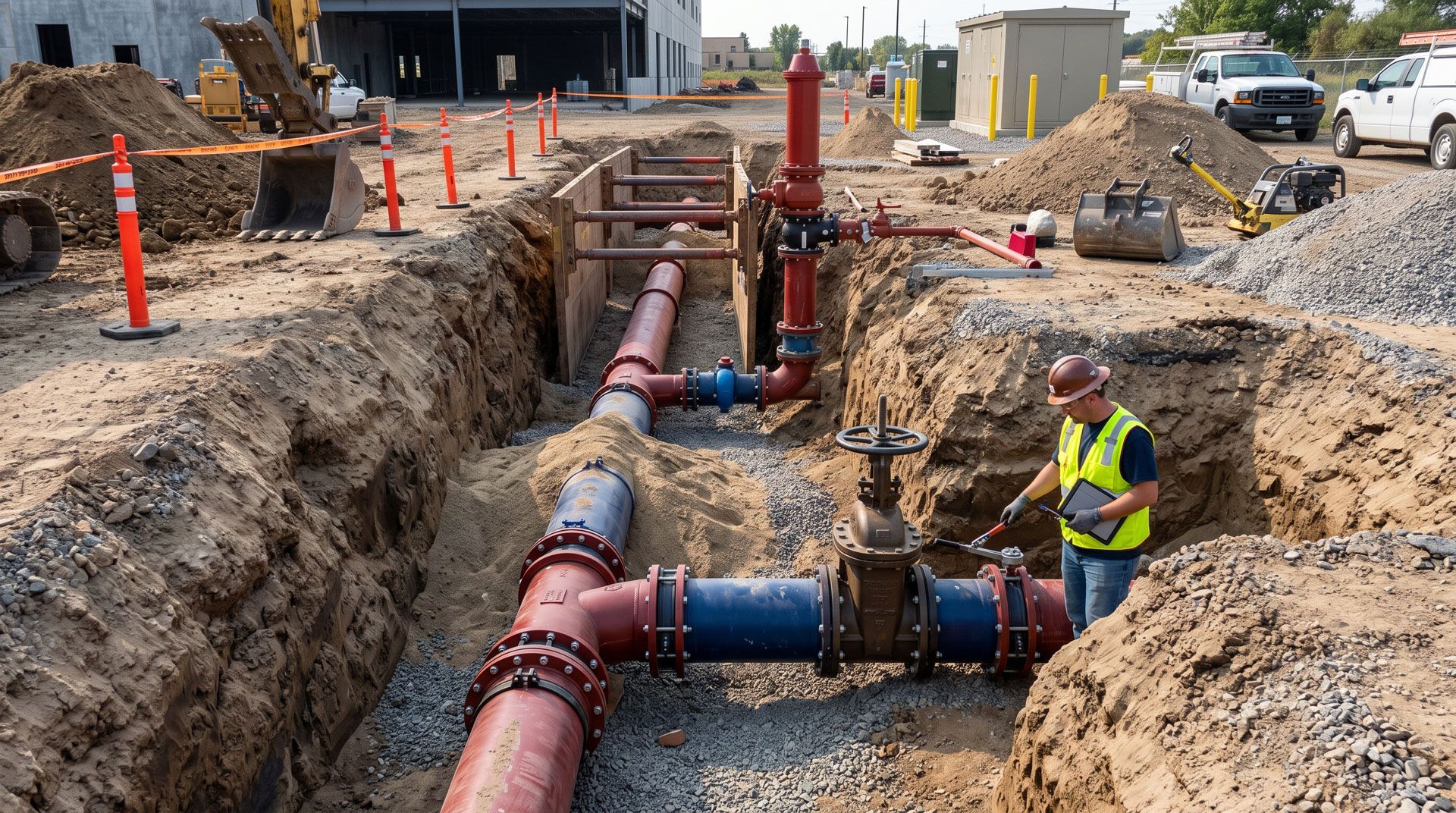
The fire service main is the piping that runs from the public water main to the building riser and private fire hydrants. Underground fire lines are commonly built with ductile iron or C900 PVC.
Backflow Assemblies
A backflow assembly near the connection to the public main separates underground fire lines from the drinking water supply.
Post Indicator Valves
Post indicator valves allow firefighters and technicians to see and control whether the underground fire line is open.
Fire Department Connections
Fire department connections let fire engines pump additional water into the system.
Private Fire Hydrants
Private fire hydrants connected to underground fire lines give firefighters access to water on large properties.
Underground Fire Line Design and Installation
Sizing and Hydraulic Design
Underground fire lines are sized to deliver the flow required by sprinklers, standpipes, and fire hydrants.
Tapping the Public Main
Connecting to the municipal main requires coordination with the water provider and approved tapping procedures.
Trenching in Goodyear Soil
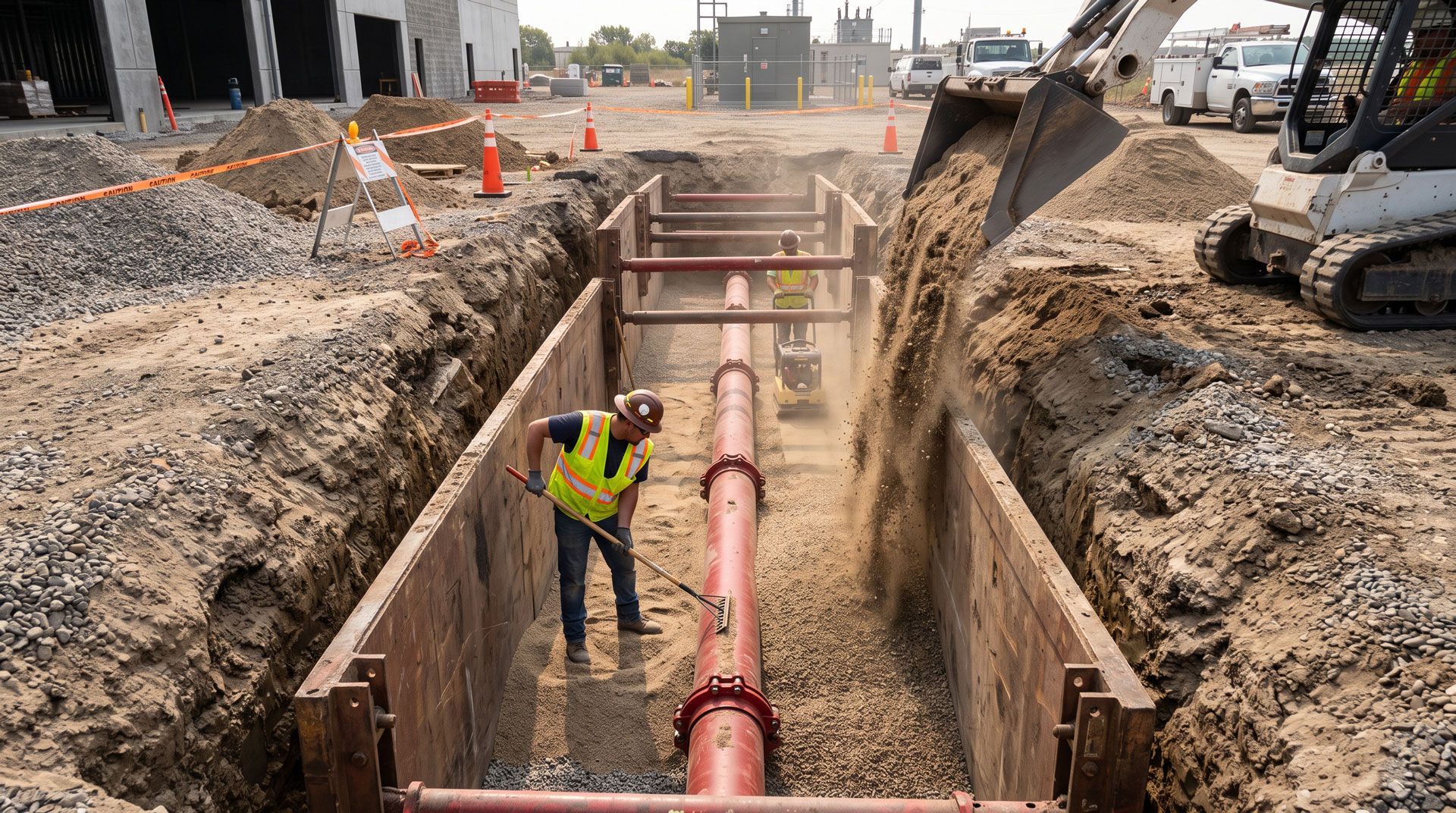
Caliche and hard desert soil can make trenching challenging. Proper equipment and planning keep underground fire line installation on schedule.
Thrust Restraint
Thrust blocks or restrained joints keep pipe from separating at bends, tees, and fire hydrants under pressure.
Bedding and Backfill
Proper bedding protects underground fire lines from damage and settlement.
Request an Underground Fire Line and Fire Hydrant Installation Quote in Goodyear, AZ
Testing and Flushing Underground Fire Lines
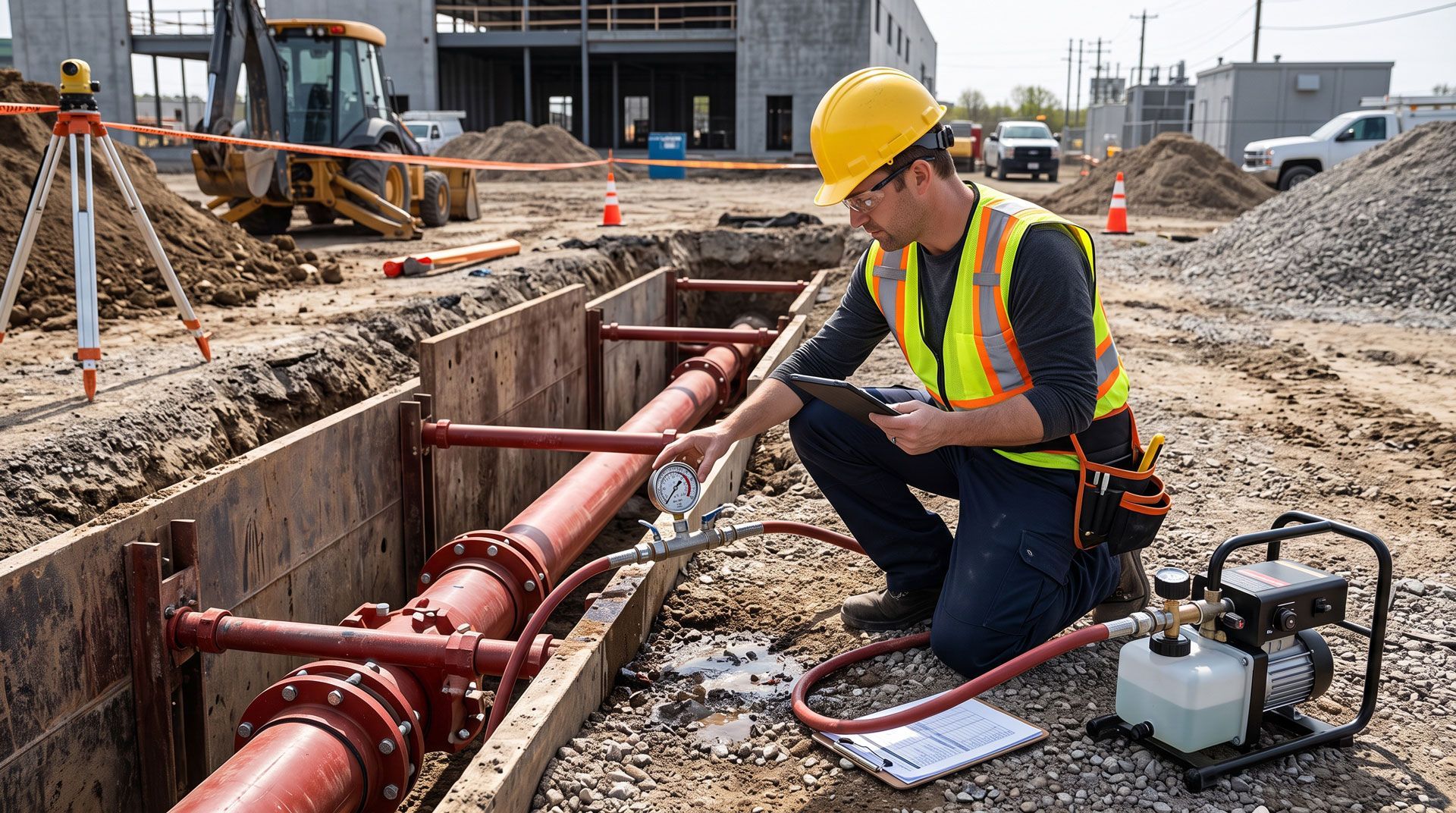
Hydrostatic Testing
NFPA 24 requires new underground fire lines to be hydrostatically tested, commonly at 200 psi or 50 psi above static pressure for two hours, to confirm there are no leaks.
Flushing
Underground fire lines must be flushed before connection to the riser to remove debris that could clog sprinkler piping.
Inspection and Approval
Fire marshal inspections confirm materials, depth, restraint, and testing before trenches are backfilled and the system is accepted.
Underground Fire Line and Fire Hydrant Repairs
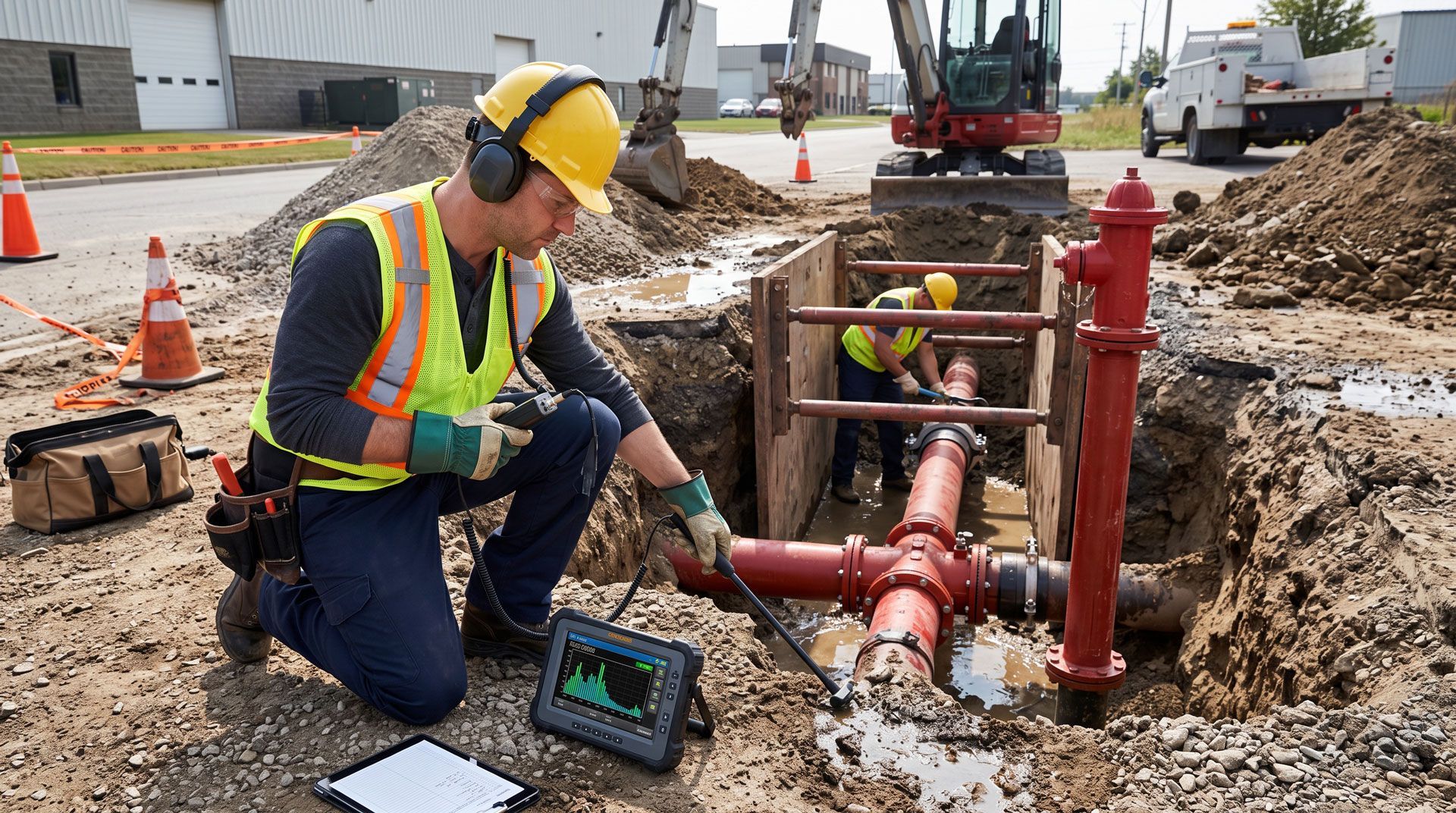
Leak Detection and Repair
Leaks in underground fire lines waste water and reduce pressure. Locating and repairing leaks restores system performance.
Replacing Aging Fire Service Mains
Older pipe materials may fail over time. Replacing underground fire lines prevents unexpected breaks.
Fire Hydrant Repairs
Damaged or malfunctioning private fire hydrants are repaired or replaced as part of underground fire line service.
Relocating Lines for Site Changes
Building additions and site redevelopment may require relocating underground fire lines and fire hydrants.
Contact Metro Valley Fire for Underground Fire Line Repair in Goodyear, AZ
Frequently Asked Questions About Underground Fire Lines and Fire Hydrants in Goodyear, AZ
What is an underground fire line?
An underground fire line is a private fire service main that carries water from the public system to a building's fire protection systems and private fire hydrants.
What code governs underground fire lines?
NFPA 24 covers installation of private fire service mains and their appurtenances.
What pipe materials are used for underground fire lines?
Ductile iron and C900 PVC are commonly used for underground fire lines.
How are underground fire lines tested?
New underground fire lines are hydrostatically tested, commonly at 200 psi or 50 psi above static pressure for two hours, and flushed before connection.
Who maintains underground fire lines?
Private underground fire lines are typically maintained by the property owner.
What is a post indicator valve?
A post indicator valve is an above-ground valve indicator showing whether the underground valve is open or closed.
Why is flushing required?
Flushing removes debris that could block sprinkler heads and piping.
How deep are underground fire lines installed?
Depth depends on local requirements, pipe material, and site conditions.
Can underground fire lines leak?
Yes. Joint failures, corrosion, and damage can cause leaks that reduce pressure.
Do fire hydrants connect to underground fire lines?
Private fire hydrants on commercial properties are connected to underground fire lines.
How long does underground fire line installation take?
Duration depends on site size, soil conditions, and coordination with water providers and inspectors.
